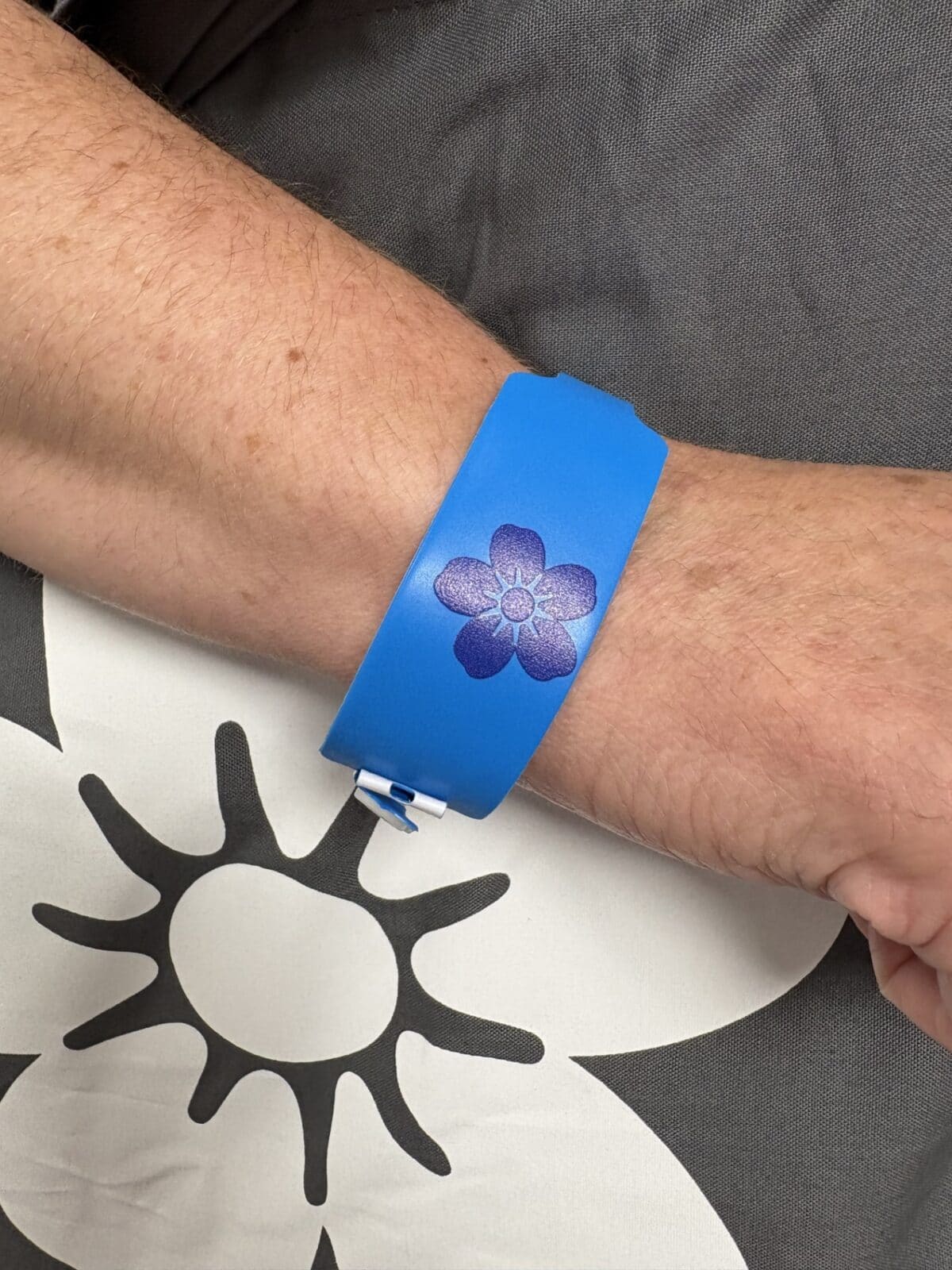
Forget-me-not wristbands are being offered to patients living with dementia who access urgent and emergency care services across Lincolnshire's hospitals, including Grantham and District Hospital.
The blue wristbands, which feature a forget-me-not flower, act as a visual prompt to help hospital staff recognise that someone may need extra help with communication or orientation around the department.
The wristbands are available at emergency departments (Lincoln County Hospital and Pilgrim Hospital, Boston), urgent treatment centres (Grantham and District Hospital, John Coupland Hospital in Gainsborough, County Hospital Louth, Skegness and District Hospital and Johnson Community Hospital in Spalding), and same day emergency care services in Lincoln and Boston.
Staff will offer the wristband during the initial triage process when a person arrives in hospital and is identified as having a formal dementia diagnosis, or where there may be concerns about confusion.
Support for hospital visits
Zoe Chapman, Safeguarding and Vulnerabilities Nurse Specialist for Dementia for Lincolnshire Community and Hospitals NHS Group, said the initiative was developed by Becky, a Patient Flow Coordinator at Pilgrim Hospital in Boston.
"We know that coming into hospital for any reason can be a cause of anxiety, especially if you're unwell and needing help quickly from our urgent and emergency care services," Chapman said. "The wristband acts as a visual reminder about the additional needs a person may have, no matter who they are talking to within our teams, to give them a better experience during their visit."
Other dementia support in place
A number of other initiatives already support people living with dementia across Lincolnshire's hospitals.
Dementia bags have been introduced to emergency departments, containing activities to engage and distract patients, such as fidget toys, colouring books and pencils, cards and information resources about dementia for patients and their carers. These have been funded by the United Lincolnshire Hospitals Charity.
RITA (Reminiscence Interactive Therapy Activities) systems are available across wards, allowing patients to listen to music, watch old films, use apps and games and access other activities as part of their hospital recovery.
Dementia-friendly features are also used across hospital buildings and clinics, including signage, clocks and mustard yellow doors on toilet facilities.